
Welcome! This page has information to help you prepare for the visit days and get to know our program better.
If you have any questions, please reach out to our Graduate Program Manager, Erin, or our Director of Graduate Studies, Jonathan.
We look forward to hosting you!

Jonathan Renshon
Position title: Associate Chair & Director of Graduate Studies | Professor: International Relations | Political Methodology
Email:
renshon

Travel Information
This is an accordion element with a series of buttons that open and close related content panels.
RSVP Form
Once you have booked your travel, please fill out our 2026 Visit Day RSVP Form and return it to Erin Moskowitz (erin.moskowitz@wisc.edu) by February 23.
Hotel Accomodations
- A block of hotel rooms has been reserved for the nights of Thursday, March 19th and Friday, March 20th at the Wisconsin Union Hotel on campus. The Department pays for the room directly and you will receive a booking confirmation from the hotel after February 20th.
- If you will be staying in Madison outside of the nights of March 19th and 20th, we recommend the following hotels on or near campus:
- Wisconsin Union Hotel
- The Fluno Center
- DoubleTree by Hilton Madison Downtown
- Hyatt Place
- Looking for more options? Destination Madison has complete listings.
Air Travel
- If you will be flying to Madison, the most convenient (but usually most costly) option is to fly directly to the Madison airport and take an Uber/Lyft to campus.
- Other airport options we’d encourage you to look at (particularly if you are flying in from outside the U.S.) are the O’Hare or Midway airports in Chicago. From either airport (or downtown Chicago), you can take a Van Galder Bus directly to campus.
- A third option is to fly to Mitchell International Airport in Milwaukee and take a Badger Bus to campus.
This is an accordion element with a series of buttons that open and close related content panels.
Buses
- Van Galder Bus provides service to and from the Chicago area (O’Hare Airport (ORD), Midway Airport (MDW), Downtown Chicago).
- Badger Bus provides service between Milwaukee Airport (MKE) and Madison. Megabus provides service between Madison and many other locations.
Parking on campus
- Visitor parking is available in university garages and in city-run ramps and lots.
- The campus map shows locations of public parking on campus, including a realtime count of open spots in each public lot.
- You can also check online for current parking availability in campus ramps and garages.
- Lot 80 is located below Union South (where the Union Hotel is located).
- Real-time parking availability
- Visitor parking rates
- Accessible parking options
Meals & Dining
- Most of your meals (Thursday dinner, and Friday breakfast, lunch, and dinner) will be provided by the Department.
- Outside of these group meals, we hope you’ll try out the great dining scene in Madison:
- Campus dining
- Madison restaurants
Schedule
Thursday, March 19
Depending on your arrival time to Madison, we may schedule individual meeting(s) with faculty for you prior to our first event at 4:15pm. Closer to the visit days we will send you a personalized schedule with meeting times and locations.
**optional for those who arrive in Madison early: 9:00-11:00am | PS 948 – Political Violence, Assistant Professor Andres Uribe, room 422 (4th floor) North Hall
**optional for those who arrive in Madison early: 12:00-1:15pm | Comparative Politics Colloquium, room 422 (4th floor) North Hall
4:15pm | Welcome and overview of the Ph.D. program, room 422 (4th floor) North Hall
5:00-6:00pm | Intellectual Life in the Department and at the University, room 422 (4th floor) North Hall
6:15pm | Dinner with faculty, Pyle Center AT&T Lounge
Friday, March 20
Individual meetings with faculty will be scheduled for you throughout the day. Closer to the visit days we will send you a personalized schedule with meeting times and locations.
8:30-9:30am | Coffee, tea, and food available, Grad Lounge (Room 101, first floor North Hall)
8:55-9:25am | Drop by for informal conversation on the experience of international students at UW, room 211 (2nd floor) North Hall
9:30-10:30am | Roundtable on Methods Training, room 422 (4th floor) North Hall
11:50am-12:50pm | Lunch with faculty, Grad Lounge (Room 101, first floor North Hall)
- Food will be served starting at 11:50am in the Grad Lounge. Once you get your food, we will be splitting up into fields for lunch:
- Comparative Politics students will be eating in room 122 (first floor)
- American Politics students will be eating in room 211 (second floor)
- International Relations students will be eating in room 315 (third floor)
- Political Theory students will be eating lunch at the Political Theory Workshop (room 422, 4th floor). Political Theory students should go directly to the Ogg room at noon – food will be served at the workshop.
**optional, 1:30-2:45pm | MEAD – Models, Experiments, and Data Workshop, room 422 (4th floor) North Hall
3:00-3:30pm | Drop by for informal conversation on the experience of students of color at UW and in academia, room 211 (2nd floor) North Hall
3:40-4:10pm | Drop by for informal conversation on the experience of women at UW and in academia, room 211 (2nd floor) North Hall
4:30-5:30pm | Roundtable on life in Madison as a graduate student, room 422 (4th floor) North Hall
6:00pm | Dinner with current graduate students, Memorial Union
Student & Faculty Collaboration
Our graduate students and faculty regularly collaborate, and student/faculty co-authorships have recently been published in top journals like American Political Science Review, American Journal of Political Science, Political Analysis, Journal of Experimental Political Science, Political Analysis, Comparative Political Studies, World Development, European Journal of Political Theory, American Politics Research, Legislative Studies Quarterly, and the Journal of Public Administration Research and Theory.
Here are a few recent highlights:
- Marko Kljajić (Summer 2025 Grad; Harvard Post-Doc), Nadav Shelef, and Ethan vanderWilden‘s (Ph.D. Candidate) article “Collective Victimhood Beliefs and Conflict-Related Attitudes: A Meta-Analysis” was recently published in Comparative Political Studies.
- Natalie Jones-Kerwin (Ph.D. Candidate) and Yoshiko Herrera were awarded the 2024 Reilly-Baldwin Wisconsin Idea Endowment Grant for their project “Engaging Wisconsin’s Native Americans in Social Science Research”. You can learn more about the project here.
- Veronica Judson (Ph.D. Candidate) and Barry Burden‘s article “District Populations and Partisan Bias” was recently published in Legislative Studies Quarterly.
-
Lotem Bassan-Nygate (2023 Grad), Jonathan Renshon, Jessica Weeks, and Chagai M. Weiss (2022 Grad)’s article “The Generalizability of IR Experiments Beyond the U.S.” was published in the American Political Science Review (2024).

Marko Kljajic
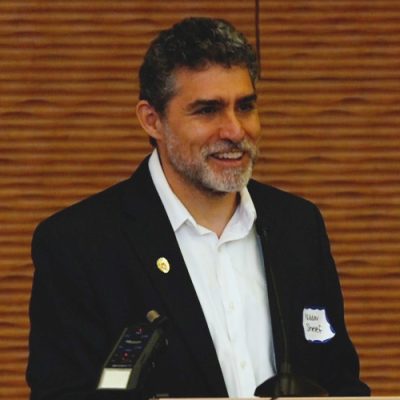
Nadav Shelef
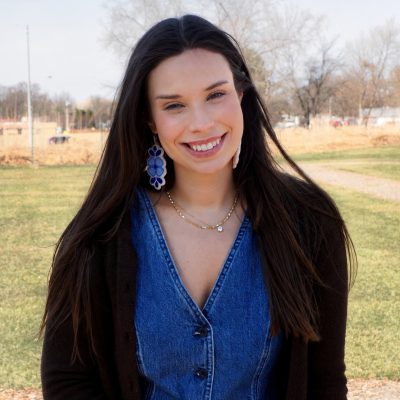
Natalie Jones-Kerwin

Yoshiko M. Herrera

Barry Burden

Jonathan Renshon
Rapoport Awards
Our department also awards multiple $5,000 Rapoport Family Foundation Awards to graduate students each summer. The program is designed to support early-career graduate students’ research and publication by funding summer collaborations with faculty. Each award provides a $5,000 summer stipend for a graduate student to work with a faculty member on a collaborative project in the field of political behavior, with the goal of producing a co-authored publication.
Recent Graduate Student Awards
Research Fellowships
UW-Madison Political Science PhD students have a stellar record of winning research funding awards, including fellowships from the National Science Foundation (Graduate Research Fellowship), National Institute of Social Science, Minerva (Department of Defense), and APSA (Doctoral Dissertation Improvement Grant).
Excellence in Research
Our students’ work wins top awards in the discipline, including the Merze-Tate Award (APSA) for best dissertation in international relations, law and politics; the MPSA Breckenridge Award for paper paper on Women & Politics; the APSA Experimental Research Section Dissertation Award, and the Kenneth Waltz Best Dissertation Award (APSA International Security).
Excellence in Teaching
Our students are also excellent instructors, regularly winning university-wide excellence in teaching awards!
This is an accordion element with a series of buttons that open and close related content panels.
2025
Dana-Allen Dissertation Fellowship at the Institute for Research in the Humanities
- Hamni Park
Campus-wide TA awards
- Ethan vanderWilden, Capstone Teaching Award
- Rachel Tan, Advanced Achievement in Teaching Award
- Ikhyun Lim, Early Excellence in Teaching Award
Mildred Potter Hovland Journal Article Prize
This prize is given annually for the best article published in or submitted to a journal by a graduate student in our program.
- Saloni Bhogale, “Term Lengths and Legislative Performance”
Leon Epstein Prize in American and British Politics
This prize is given biennially for the best written work in the study of American and British politics that exemplifies the comparative standards of scholarship set by Professor Epstein.
- Jessie Munson, “Claiming and Blaming: How Minority Party Status Shapes Filibuster Framing in the U.S. Senate”
2024-2025 Best Dissertation Prize winners
- International Relations: X Zhang
- Comparative Politics: Marko Kljajić and Priyadarshi Amar
- Political Theory: Tim Tennyson
- Diversity, Equity, Justice & Power: Priyadarshi Amar
APSA Doctoral Dissertation Research Improvement Grant
Holz Center Fujimura Prize
Young Initiative Fellowship
Waltz best dissertation award – APSA International Security Section
Honorable mention, best dissertation award – International Society of Political Psychology (ISPP)
Society for the Scientific Study of Religion Research Grant
UW-Madison Department of Political Science 2025 TA Awards
Ronald Rapoport Summer Research Collaborative Program
National Science Foundation Graduate Research Fellowships Program (Honorable Mention)
UW-Madison Campus Teaching Award: Advanced Achievement in Teaching Award
International Division Pre-Dissertation Scholarship
Graduate School Student Commitment to Engagement and Activism Award
College of Letters & Science Teaching Mentors Program
M. Crawford Young Award in African Politics
2024
APSA 2024 Advancing Research Grant for Indigenous Politics
2025 Department of Political Science Teaching Fellows Award
APSA Religion and Politics grant for her project “Sacred Votes: How Evangelical Churches Influence Electoral Outcomes in Brazil”
Mildred Potter Hovland Journal Article Prize for his Political Research Quarterly article: “Does Artificial Intelligence Speak Our Language? A Gadamerian Assessment of Generative Language Models.”
UW-Madison Department of Political Science Best Dissertation Prize
- Kennia Coronado, Diversity, Equity, Justice, and Power
- Xinzhi Zhao, Political Theory
- Rochelle Snyder, American Politics
- Hohyun Yoon, International Relations
2024 Merze Tate Award for the best doctoral dissertation in the field of international relations, law, and politics
APSA Experimental Research Section prize for the best dissertation defended in 2023
2024 National Institute of Social Science Dissertation grant
Reilly-Baldwin Wisconsin Idea Endowment Grant for their project “Engaging Wisconsin’s Native Americans in Social Science Research”
Emerging Scholar Award by the Harry Frank Guggenheim Foundation
MPSA Sophonisba Breckinridge Award (best paper on women and politics for her paper “Symbolic Representation in New Democracies”)
2024-2025 Minerva-USIP Peace and Security Fellow (U.S. Institute of Peace)
Law and Science Dissertation Grant
UW-Madison Department of Political Science 2024 TA Awards
2024-25 APSA Diversity Fellow
College of Letters & Science Teaching Mentors Program
UW-Madison Campus Teaching Award: Capstone Teaching Award
Foreign Language and Area Studies fellowship (FLAS)
2023
Center for Arabic Study Abroad (CASA II) Fellowship, U.S. Department of Education
Ronald Rapoport Summer Research Collaborative Program
George Washington Statesmanship Fellow
APSA Small Grant Proposal for Research in Religion and Politics
APSA Diversity and Inclusion Advancing Research Grant for Indigenous Politics
Travel, Research, and Engagement Grant from the Project on Middle East Political Science (POMEPS)
Mildred Potter Hovland Prize
- Xinzhi Zhao, “Monopoly and the Dysfunction of the Social Mechanism of Equal Respect,” published in the Adam Smith Review
Leon Epstein Prize
- Dillon Laaker, “Economic Shocks and the Development of Immigration Attitudes,” published in the British Journal of Political Science
APSA Centennial Center Summer Research Grant
ASEEES Dissertation Improvement Grant
Visiting fellowship at Harvard’s Davis Center for Russian and Eurasian Studies
Carnegie/Harriman Research Grant
Foreign Language and Area Studies fellowship (FLAS)
UW-Madison Department of Political Science Best Dissertation Prize
- Lotem Bassan, International Relations
- Marcy Shieh, American Politics
- Juan Qian, Comparative Politics
- Philip Bunn, Political Theory
URS Exceptional Mentorship Award for 2022-2023
UW-Madison Department of Political Science 2023 TA Awards
Crawford Young Research Award
APSA’s 2023-2024 Spring Diversity Fellowship
Frank Cass 2023 Award for Best Article by a Young Scholar published in Democratization in 2022 (“When reorganizing coercion backfires: explaining the mechanisms of revolt in Sudan and Algeria”)
Review of Politics Award (MPSA) for her paper: “Machiavelli’s Ecstatic Politics: An Invitation to an Inquiry”
Best Graduate Student Paper for the MPSA Latina/o Caucus Best Graduate Student Paper for “The Construction of Latino Identity in Presidential Elections”
2022
Summer Foreign Language and Area Studies Fellowship (FLAS)
UW-Madison University Housing Honored Instructor Award
University of Wisconsin-Madison Capstone Teaching Award
UW-Madison Middle East Studies Program Award for Excellence in Graduate Research
Mildred Potter Hovland Journal Article Prize
APSA Dissertation Improvement Grant
UW-Madison Department of Political Science Best Dissertation Prize
- Pete Erickson, International Relations
- Anton Shirikov, Comparative Politics
- Chagai Weiss, Comparative Politics
Sabbatical Award, Institute for Humane Studies
Foreign Language and Area Studies Fellowship (FLAS)
College of Letters & Science Teaching Mentor
Fellow, ASPA’s Institute for Civically Engaged Research (ICER)
National Science Foundation (NSF) Graduate Research Fellowship (GRF)
Crawford Young Research Award
UW-Madison Department of Political Science 2022 TA Awards
George L. Mosse Graduate Exchange Fellowship
Bourse and Bazaar Foundation Visiting Fellowship
Humane Studies Fellowship
Mary Washburn Willetts Award
U.S. Department of State, Fulbright-Hays Doctoral Dissertation Research Abroad
IRIS Fieldwork Award
Scott Kloeck-Jenson Fellowship
Ronald Rapoport Summer Research Collaborative Program
2021
Critical Language Scholarship (CLS), U.S. Department of State
Foreign Language and Area Studies Fellowship (FLAS)
APSA Dissertation Improvement Grant
APSA Summer Centennial Grant
L&S Teaching Fellows Award
University of Wisconsin-Madison Capstone Teaching Award
University of Wisconsin-Madison Early Excellence in Teaching Award
University of Wisconsin-Madison Continuity of Instruction Award
UW-Madison Department of Political Science 2021 TA Awards
Humane Studies Fellowship
Jordan Prize, African Studies Program
Genevieve Gorst Herfurth Award for Outstanding Research in the Social Sciences
- Anna Meier
- Chagai Weiss (honorable mention)
Mildred Potter Hovland Journal Article Prize
Leon Esptein Prize in American and British Politics
Adam Smith Fellowship, Mercatus Center
Research Group Funding Award (Survey of attitudes toward GMOs in Mexico), University of Wisconsin-Madison
Hsueh International Fellowship Fund, American Political Science Association
Oskar Morgenstern Fellowship, George Mason University
CREECA FLAS Fellow (Kazakh language and Central Asian area studies)
Recent Publications from our Graduate Students
Our graduate students are actively engaged in all professional aspects of the field, including publishing in top journals. You can see an archive of these publications by clicking the links below.
This is an accordion element with a series of buttons that open and close related content panels.
2025
Junda Li & Dwayne Woods. “Are you in the loop? China’s co-evolution dynamics”. Journal of Evolutionary Economics 36, 21 (2026).
Marko Kljajić, Nadav Shelef, and Ethan vanderWilden. Collective Victimhood Beliefs and Conflict-Related Attitudes: A Meta-Analysis. Comparative Political Studies, 0(0). 2025.
Burden, Barry C., and Veronica J. Judson. “District Populations and Partisan Bias.” Legislative Studies Quarterly.
Ethan vanderWilden and Balcells L., Martínez S. “Discounting extreme positions: party normalization and support for the far right.” Political Science Research and Methods, 1–9. 2025.
Howard Schweber and Rebecca Anderson. “Incitement on the Internet: Rethinking First Amendment Standards in Cyberspace,” in Eric T. Kasper and JoAnne Sweeney eds., Free Speech and Incitement in the Twenty-First Century (SUNY Press). 2025.
Jérémie Langlois and Marwa Shalaby. “Legislative responsiveness, urban growth, and popular mobilization: Evidence from Algeria.” World Development, Volume 195. 2025,
2024
Barry C. Burden and Jess Esplin. “People Versus Places: The Unrepresentative Nature of Local Election Administration.” In Local Election Administrators in the United States, eds. Paul Gronke et al. Springer. 2024.
Junda Li and D. Woods. “Dangerous depths of bifurcation: the rise of ‘inter-national security narcissists’ and undersea cable (dis) connections.” Asian Security, 1–23. 2024.
Hohyun Yoon. “Getting Angry, Winning Crises: Anger Expressions and Coercive Credibility in International Crises”, American Journal of Political Science. Forthcoming. 2024.
Nadav Shelef and Ethan vanderWilden. “Re-evaluating the impact of collective victimhood on conflict attitudes: Results from a natural experiment, a survey experiment, and panel study using Israel’s Holocaust Memorial Day.” American Journal of Political Science 1–19. 2024.
Natalie L. Smith and Susan Webb Yackee. “A New Measure of U.S. Public Agency Policy Discretion.” Journal of Public Administration Research and Theory. 2024.
Pinell, Phillip. “Might Makes Rights: A Ciceronian Critique of Pettit’s Theory of Liberty,” POLIS: The Journal for Greek and Roman Political Thought, Forthcoming.
Phillip Pinell. “Does Artificial Intelligence Speak Our Language?: A Gadamerian Assessment of Generative Language Models,” Political Research Quarterly, 0(0). 2024.
Phillip Pinell. “How a People Becomes a People: Memory and Identity in Jefferson’s Notes on the State of Virginia.” American Political Thought. Forthcoming. 2024.
Phillip Pinell. “Tocqueville and Democratic Historical Consciousness,” The European Legacy. Forthcoming. 2024.
Phillip Pinell. “Nostalgia for Empire? José Ortega y Gasset, Memory, and ‘The Spanish Problem’”, The Political Science Reviewer, 48(2). 2024.
Phillip Pinell. “Thinking and Political Considerations: Gnômê in the Stoic Political Philosophy of Epictetus,” The Political Science Reviewer 47, no. 3 (2023), 1-26. 2024.
Valeria Umanets. “Proportional representation and party fragmentation in electoral autocracies.” Democratization: 1-21. 2024.
Valeria Umanets, Marat Iliyasov, Aleksandra Garmazhapova, and Yasin Hakim. “Repurposing Tradition to Justify the War in Ukraine.” PONARS Eurasia Policy Memo No.878. 2024.
Xinzhi Zhao. “Monopoly and the Dysfunction of the Social Mechanism of Equal Respect: a new reading of Adam Smith’s critique of monopoly.” Adam Smith Review. 2024.
2023
Adeline Lo, Devin Judge-Lord, Kyler Hudson, and Kenneth R. Mayer. “Mapping Literature with Networks: An Application to Redistricting.” Political Analysis. 2023.
Chagai Weiss and Anna Getmansky. “War Time Military Service Can Affect Partisan Preferences.” Comparative Political Studies. 2023.
Chagai Weiss and Anna Getmansky. “Interstate Conflict Can Reduce Support for Incumbents: Evidence from the Israeli Electorate and the Yom Kippur War.” Journal of Conflict Resolution. 2023.
Dillon Laaker. “Economic Shocks and the Development of Immigration Attitudes.” British Journal of Political Science. 2023.
Hohyun Yoon and Andrew McWard. “Preventing Coups and Seeking Allies: The Demand and Supply of Alliances for Coup-Proofing Regimes.” Journal of Conflict Resolution. 2023.
Marika Olijar and Junda Li. “Persuasion or polarization? LGBTQ+ attitudes among young social media users in Kazakhstan.” Central Asian Survey (2023): 1-22. 2023.
Natalie Jones-Kerwin, Peterson, D.A. “Group Consciousness and the Politics of American Indians.” Political Behavior. 2023.
Ned Littlefield. “Examining the Crime-Conflict Distinction: Victimization and Political System Support in Colombia.” Journal of Politics in Latin America. 1-29. w/ Maria Camila Angulo Amaya. 2023.
Ned Littlefield and Douglas Block. “Identity, Conflict and Discourse: Understanding Military Contestation in Brazil.” Journal of Latin American Studies. 2023.
Ned Littlefield. “After racial democracy? The state’s rhetorical reconstruction of national identity in Brazil (1990-2019).” Latin American and Caribbean Ethnic Studies. 2023.
Ned Littlefield. “After racial democracy? The state’s rhetorical construction of national identity in Brazil.” Latin American and Caribbean Ethnic Studies. 2023.
Ned Littlefield and Douglas Block. “Identity, Conflict & Discourse: Understanding Military Contestation in Brazil.” Journal of Latin American Studies. 2023.
Ned Littlefield, Omar O. Dumdum, and Oliver Lang. “Why do populists flip-flop on soldiers? The drug war’s civil-military commitment problem.” In Handbook on Democracy and Security. Eds. Nicholas A. Seltzer and Steven Lloyd Wilson. Cheltenham, United Kingdom: Edward Elgar Publishing Limited. 211-230. 2023.
Timothy Tennyson and Michelle Schwarze. “An honest man?: Rousseau’s critique of Locke’s character education.” European Journal of Political Theory. 2023.
2022
Aili Mari Tripp and Thomas S. Worth. “War, Peace, and Security.” The Routledge Global History of Feminism. Eds. Bonnie G. Smith and Nova Robinson. 2022.
Anton Shirikov. “The Oligarch Vanishes: Defensive Ownership, Property Rights, and Political Connections.” Quarterly Journal of Political Science. (With John Earle, Scott Gehlbach, and Solomiya Shpak.) 2022.
Anton Shirikov. “Russia: Muddling Through Populism and the Pandemic.” Renno, Lucio, and Nils Ringe (eds.). Populists and the Pandemic: How Populists Around the World Respond to COVID-19. Routledge. With Yoshiko M. Herrera and Valeriia Umanets. 2022.
Chagai M. Weiss, Alexandra Siegel, and David Romney “How Threats of Exclusion Mobilize Palestinian Political Participation.” The American Journal of Political Science. 2022.
Chagai Weiss, Eugene Finkel, Yon Lupu, Dan Miodownik, and Neal Tsur. “Atypical Violence and Conflict Dynamics: Evidence from Jerusalem.” Political Science Research and Methods. 2022.
Chagai Weiss, Kyle Peyton, and Paige Vaughn. “Beliefs about Minority Representation in Policing and Support for Diversification.” Proceedings of the National Academy of Sciences. 2022.
Chagai Weiss, Ryan Brutger, Joshua Kertzer, Jonathan Renshon, and Dustin Tingley. “Abstraction and Detail in Experimental Design. American Journal of Political Science. 2022.
Hyo Won Lee, Yena Kim, and Whasun Jho. “Domestic Politics and Requests for UNESCO’s International Assistance Program.” International Interactions. 2022.
Jérémie Langlois. “When Reorganizing Coercion Backfires: Explaining the Mechanisms of Revolt in Sudan and Algeria.” Democratization, 29:7, 1310-1331. 2022.
Katherine Jensen and Lisa M. Sousa Dias. “Varied Racialization and Legal Inclusion: Haitian, Syrian, and Venezuelan Forced Migrants in Brazil.” American Behavioral Scientist. 2022.
Lotem Bassan-Nygate & Gadi Heimann. “Dealing with Guilt and Shame in International Politics.” International Relations. 2022.
Marta Lorimer & Ethan vanderWilden. “France: Balancing respectability and radicalization in a pandemic.” In Populists and the Pandemic: How Populists Around the World Respond to COVID-19, eds. N. Ringe and L. Renno. London: Routledge. 2022.
Ned Littlefield and Joe Peterangelo. “Hitting Home: Milwaukee’s homeownership inequities and how we compare to peer cities.” Wisconsin Policy Forum. 2022.
Peter Erikson, Marko Kljajic, and Nadav Shelef. “Domestic military deployments in response to COVID-19.” Armed Forces & Society. 2022.
Philip D. Bunn. “Silicon Valley Stoics?: Life-Hacking, Transhumanism, and Stoic Therapy.” Political Science Reviewer. 2022.
Rikhil R. Bhavnani and Saloni Bhogale. “India in 2021: At the Crossroads.” Asian Survey 62(1): 161–172. 2022.
Ryan Brutger, Joshua D. Kertzer, Jonathan Renshon, Dustin Tingley and Chagai M. Weiss. “Abstraction and Detail in Experimental Design.” The American Journal of Political Science. 2022.
Saloni Bhogale & Pavithra Suryanarayan. “India: The Good, the Bad, and the Deadly Consequences of India’s Pandemic Response.” In Populists and the Pandemic: How Populists Around the World Respond to COVID-19, eds. N. Ringe and L. Renno. London: Routledge. 2022.
Sujin Cha, Yehzee Ryoo, and Sung Eun Kim. “Losing Hearts and Minds? Unpacking the Effects of Chinese Soft Power Initiatives in Africa.” Asian Survey: 1-30. 2022.
Timothy T. Tennyson. “Cicero’s Romulus and the Crafting of Historical Exempla.” History of Political Thought, Vol. 43, No.1. 2022.
Xinzhi Zhao, “Ideological Context and the Study of Political Theory.” Hobbes Studies, Vol. 35, Issue 1. 2022.
2021
Alexander Kustov, Dillon Laaker, and Cassidy Reller. “The Stability of Immigration Attitudes: Evidence and Implications.” Journal of Politics. 83 (4): 1478-1494. 2021.
Anton Shirikov. “Who Gets Ahead in Authoritarian Parliaments? The Case of the Russian State Duma.” The Journal of Legislative Studies. 2021.
Barry C. Burden and Rochelle Snyder. “Explaining Uncontested Seats in Congress and State Legislatures.” American Politics Research. 2021.
Chagai M. Weiss.“Diversity in Israeli Healthcare Institutions Reduces Prejudice towards Arabs.” Proceedings of the National Academy of Sciences, 118.14. 2021.
Frederick R. Chen. “Extended Dependence: Trade, Alliances, and Peace.” Journal of Politics. 83(1): 246–259. 2021.
Haftel, Yoram Z., Soo Yeon Kim, & Lotem Bassan-Nygate. “High-Income Developing Countries, FDI Outflows and the International Investment Agreement Regime.” World Trade Review, 1-17. 2021.
Jiaqi Lu. “The Politics of Coal in the United States.” Book chapter, Political Determinants of Energy and Climate Policy, Routledge Press, with Gregory Nemet. 2021.
Jiaqi Lu. “Investigation of a coupling coordination degree model between low-carbon development and air quality in China.” Advances in Climate Change Research, (with T. Liu and Q. Song, and Y. Qi). 2021.
Juan Qian. “Historical Ethnic Conflicts and the Rise of Islamophobia in Modern China.” Ethnopolitics. 2021.
Kate M. Carter. “Internet Access and Control in Uganda.” In Examining Internet and Technology around the World, ed. Laura M. Steckman (Santa Barbara: ABC-CLIO). 2021.
Levi Bankston & Barry C. Burden. “Voter mobilization efforts can depress turnout.” Journal of Elections, Public Opinion and Parties. 2021.
Lotem Bassan-Nygate & Chagai M. Weiss. “Party Competition and Cooperation Shape Affective Polarization: Evidence from Natural and Survey Experiments in Israel.” Comparative Political Studies. 2021.
Lotem Bassan-Nygate. “My Heart is in the West: Formation of Western Identity in Israel around the Korean War.” Politika, 30: 40-61. 2021.
Omar O. Dumdum & Levi Bankston. “The Interplay of Actors in Political Communication: The State of the Subfield.” Political Communication. 2021.
Philip D. Bunn. “Transcendent Rebellion: The Influence of Simone Weil on Albert Camus’ Esthetics.” Perspectives on Political Science. 2021.
Rochlitz, Evgeniia Mitrokhina, & Nizovkina, I. “Bureaucratic discrimination in electoral authoritarian regimes: Experimental evidence from Russia.” European Journal of Political Economy. 2021.
Veronica Fenocchio Azzi and Ned Littlefield. “Continuidade ou mudança? As relações civis-militares após a Intervenção Federal no Rio de Janeiro.” Revista Eletrônica de Ciência Política 12(1): 29-48. 2021.
Xinzhi Zhao. “A Ciceronian Defense of Democratic Participation.” Política & Sociedade, vol. 20, no. 47, pp. 103–129. 2021.
Intellectual Life in the Department of Political Science
Workshops & Colloquia
Department of Political Science Ph.D. students are encouraged to participate in our weekly workshops and colloquia. Workshops are one of the most important intellectual spaces in the department, providing an opportunity to become exposed to cutting-edge research and a chance to meet with scholars from other universities. In addition to featuring faculty papers and outside speakers, the workshops are an integral part of graduate training, serving as a place for students to present papers, as well as dissertation prospectuses, grant proposals, dissertation chapters, and practice job talks.
Political Science Graduate Workshop (PSGW)
PSGW focuses on personal and professional development for current graduate students in the Political Science Department. The PSGW’s mission is to “foster communication and information-sharing among the grad students and faculty members of the Political Science Department, and to promote professional development opportunities for the grad students.” The topics covered in PSGW range from topics in graduate life (health and balance, financial life) to discipline-specific professional development (publishing, communications). This workshop typically convenes two times per semester each academic year.
Examples of past workshops include: “Tips and Tricks of Conferences”, “Building Individual Development Plans”, “Planning for Summer Breaks” & “Preparing for Prelim Exams”, “What I Wish I Knew about Graduate School & the Department”, and the “Lifecycle of a Publication”.
Where our Grads are Now (since 2014-2015)
Tenure-Track Positions
Wisconsin is one of the top 20 departments in political science that collectively account for 67% of all tenure track placements, and 10-years post-degree, 76% of Ph.D.s surveyed were employed in tenure-track jobs.
Graduates from our program primarily pursue academic careers with the goal of a tenure-track position at a college or university. In recent years, our students have been offered tenure track positions at leading research universities such as Yale, Harvard, the Ohio State, University of Michigan, University of Minnesota, Cornell, Northwestern, University of Iowa, University of Pittsburgh, Boston College, Texas A+M, and Georgetown, among others. Our students also do well in obtaining positions at selective liberal arts colleges, such as Middlebury, Denison, Amherst, Grinnell, Wesleyan, Macalester, and the University of San Francisco.
Post-Doctoral Fellowships
Consistent with trends in the discipline, many students now receive a one or two-year post-doctoral fellowship after receiving their PhDs from our Department, and in recent years our students have been awarded many of these, including at London School of Economics, Harvard, Georgetown, University of Pennsylvania, Princeton, Yale, Stanford, Brown, Northwestern, and Columbia.
Non-Academic Positions
Many of our students will also choose to enter the private sector, the non-profit world, or government. In recent years our students have pursued careers such as Data Scientists, Consultants, Researchers, and Directors.
- 2024-2025
- 2023-2024
- 2022-2023
- 2021-2022
- 2020-2021
- 2019-2020
- 2018-2019
- 2017-2018
- 2016-2017
- 2015-2016
- 2014-2015
| Name | Subfield | Position | Institution |
| Phillip Pinell | Political Theory | Teaching Faculty | Florida State University |
| Tim Tennyson | Political Theory | Post-Doc | Brown University |
| X Zhang | International Relations | Post-Doc | Stanford University |
| Marko Kljajic | Comparative Politics | Post-Doc | Harvard University |
| Priyadarshi Amar | Comparative Politics | Post-Doc | University Carlos 3 Madrid |
| Garrett Jones | Political Theory | Post-Doc | University of Texas-Austin |
| Name | Subfield | Position | Institution |
| Rochelle Snyder | American Politics | Assistant Professor | Coe College |
| Valeria Umanets | Comparative Politics | Post-Doc
Assistant Professor |
University of Pittsburgh
Tulane University |
| Thomas Worth | Comparative Politics | Visiting Assistant Professor | St. Olaf College |
| Hohyun Yoon | International Relations | Post-Doc
Assistant Professor |
University of PennsylvaniaWashington State University |
| Kennia Coronado | American Politics | Post-Doc
Assistant Professor |
Texas Women’s UniversityCornell University |
| Joorahm Kim | Political Theory | Assistant Professor | International University of Japan |
| Xinzhi Zhao | Political Theory | Lecturer | University of Maryland-College Park |
| Dillon Laaker | International Relations | Post-Doc
Assistant Professor |
London School of Economics
Cornell University |
| Noah Stengl | Political Theory | Lecturer | University of Wisconsin-Madison |
| Name | Subfield | Position | Institution |
| Yumi Park | International Relations | Assistant Professor | Copenhagen Business School |
| Andrew McWard | International Relations | Assistant Professor | Denison University |
| Philip Bunn | Political Theory | Post-Doc
Assistant Professor |
Clemson University
Covenant College |
| Marcy Shieh | American Politics | Post-Doc
Assistant Professor |
University of North Carolina at Charlotte
Miami University |
| Lotem Bassan-Nygate | International Relations | Post-Doc
Assistant Professor |
Princeton University
Harvard University |
| Kirstin Anderson | Political Theory | Assistant Professor | Hope College |
| Jiaqi Lu | Comparative Politics | Post-Doc
Senior Academic Researcher |
Georgetown
Boston University |
| Juan Qian | Comparative Politics | Instructor | Chicago University |
| Levi Bankston | American Politics | Private Sector |
| Name | Subfield | Position | Institution |
| Frederick Chen | International Relations | Assistant Professor
Assistant Professor |
Nanyang Technological University
The Ohio State University |
| Anton Shirikov | Comparative Politics | Post-Doc
Assistant Professor |
Columbia University
University of Kansas |
| Caileigh Glenn | International Relations | Post-Doc
Post-Doc Assistant Professor |
MIT
Duke University Middlebury College |
| Chagai Weiss | Comparative Politics | Post-Doc
Assistant Professor |
Stanford University
University of Toronto |
| David Greenwood-Sanchez | Comparative Politics | Post-Doc
Assistant Professor |
University of Iowa
University of Iowa |
| Name | Subfield | Position | Institution |
| Anne Jamison | International Relations | Post-Doc
Post-Doc Assistant Professor |
Princeton University
Stellenbosch University Copenhagen Business School |
| Camila Angulo | Comparative Politics | Assistant Professor
Assistant Professor |
CIDE
Indiana University Northwest |
| Devin Judge-Lord | American Politics | Post-Doc
Assistant Professor |
Harvard University
University of Michigan |
| Dmitrii Kofanov | Comparative Politics | Post-Doc
Post-Doc |
University of Barcelona
University of Pittsburgh |
| Anna Meier | International Relations | Assistant Professor | University of Nottingham |
| Kaden Paulson-Smith | Comparative Politics | Assistant Professor
Assistant Teaching Professor |
University of Wisconsin-Green Bay
University of Massachusetts, Dartmouth |
| Sujeong Shim | International Relations | Post-Doc
Assistant Professor |
University of Zurich
NYU Abu Dhabi |
| Micah Dillard | International Relations | Data Scientist | Morning Consult |
| Michael DeCrescenzo | American Politics | Quantitative Researcher | DRW |
| Ben Power | International Relations | Associate | Oliver Wyman |
| Delgerjargal Uvsh | Comparative Politics | Post-Doc
Post-Doc Post-Doc Assistant Professor |
New York University
University of Southern California University of Houston The University of Texas at Austin |
| Evan Morier | Comparative Politics | Data Analytics Developer | Mathematica |
| Name | Subfield | Position | Institution |
| Nick Barnes | Comparative Politics | Assistant Professor | University of Saint Andrew’s – Scotland |
| Michael Masterson | International Relations | Assistant Professor | Missouri State University |
| Maayan Mor | Comparative Politics | Post-Doc
Assistant Professor |
University of Barcelona
Tulane University |
| Anna Oltman | International Relations | Assistant Professor | University College-London |
| Michael Promisel | Political Theory | Assistant Professor
Visiting Research Fellow Assistant Professor |
Coastal Carolina University
University of Notre Dame Catholic University of America |
| Katie Robiadek | Political Theory | Assistant Professor
Assistant Professor |
Hood College
Xavier University |
| Zach Warner | Comparative Politics | Assistant Professor | Purdue University |
| Danielle Delaney | Political Theory | Assistant Professor | Queen’s University |
| Name | Subfield | Position | Institution |
| Desiree Desierto | Comparative Politics | Post-Doc
Post-Doc Assistant Professor |
University of Rochester
University of Pittsburgh George Mason University |
| Rachel Jacobs | Comparative Politics | Assistant Professor | Dickinson College |
| Susanne Mueller-Redwood | International Relations | Visiting Faculty
Assistant Professor |
Mount Holyoke College
Montana State University |
| Camilla Rueterswaerd | Comparative Politics | Post-Doc
Research Fellow Assistant Professor |
Freie Universitat Berlin
University of Sussex Uppsala University |
| Rachel Schwartz | Comparative Politics | Post-Doc
Assistant Professor Assistant Professor |
Tulane University
Otterbein University University of Oklahoma |
| Dan Walters | American Politics | Assistant Professor
Associate Professor |
Penn State
Texas A&M University |
| David Lassen | American Politics | Community-Engaged Learning Program Director | University of Notre Dame |
| Clarence Moore | Comparative Politics | Private Sector – Consulting |
| Name | Subfield | Position | Institution |
| Zachary Barnett-Howell | International Relations | Senior Data Scientist | Samsara |
| Hannah Chapman | Comparative Politics | Assistant Professor
Assistant Professor |
Miami University
University of Oklahoma |
| Evan Crawford | American Politics | Assistant Professor | University of San Diego |
| Katelyn Jones | Political Theory | Vice President of Policy, Research, and Evaluation | YWCA Metropolitan Chicago |
| Kathleen Klaus | Comparative Politics | Post-Doc
Visiting Assistant Professor Assistant Professor Associate Senior Lecturer |
Northwestern University
Wesleyan University University of San Francisco Uppsala University |
| Christopher Krewson | American Politics | Assistant Professor
Assistant Professor |
Claremont University
Brigham Young University |
| Ning Leng | Comparative Politics | Post-Doc
Assistant Professor |
Harvard University
Georgetown University |
| Mark Toukan | International Relations | Post-Doc
Associate Political Scientist |
University of Pennsylvania
RAND |
| Regina Wagner | American Politics | Assistant Professor | University of Alabama |
| Jennifer Brookhart | American Politics | Director of Cyber Analytics | Mastercard |
| Matt Scharf | Comparative Politics | Deputy Public & Govt Affairs Manager (Guyana) | ExxonMobile |
| Name | Subfield | Position | Institution |
| Sirus Bouchat | Comparative Politics | Assistant Professor | Northwestern University |
| Thomas Bunting | Political Theory | Assistant Professor | Shawnee State University |
| Kyle Marquardt | Comparative Politics | Post-Doc
Assistant Professor Associate Professor |
University of Gothenburg
Higher School of Economics University of Bergen |
| Ryan Powers | International Relations | Post-Doc
Assistant Professor |
Yale University
University of Georgia |
| Charles Taylor | Comparative Politics | Instructor and Course Director | Foreign Service Institute |
| Samantha Vortherms | Comparative Politics | Post-Doc
Assistant Professor |
Stanford University
UC-Irvine |
| Brianne Wolf | Political Theory | Assistant Professor
Assistant Professor |
Ashland University
Michigan State University |
| Name | Subfield | Position | Institution |
| Ethan Alexander-Davey | Political Theory | Post-Doc
Assistant Professor |
University of Richmond
Campbell University |
| Sanja Badanjak | Comparative Politics | Post-Doc | University of Edinburgh |
| Jessica Clayton | International Relations | Institutional Planner | UW-Whitewater |
| Simon Haeder | American Politics | Assistant Professor
Assistant Professor Associate Professor |
West Virginia University
Penn State University Texas A&M University |
| Bradley Jones | American Politics | Senior Research Director | YouGov |
| Dalton Lin | International Relations | Post-Doc
Assistant Professor |
Academia Sinica-Taiwan
Georgia Institute of Technology |
| James Sieja | American Politics | Assistant Professor | St. Lawrence University |
| Benjamin Toff | American Politics | Post-Doc
Assistant Professor |
Oxford University
University of Minnesota |
| Steven Wilson | Comparative Politics | Post-Doc
Assistant Professor Assistant Professor |
University of Gothenburg
University of Nevado-Reno Brandeis University |
| Dominic Desapio | Comparative Politics | Private Sector/Government | |
| Casey Erhlich-Rollow | Comparative Politics | Senior Manager, Research Review and Support | The Pew Charitable Trusts |
| Lynn Fredrikkson | Comparative Politics | Advocacy Director for Africa | Amnesty International USA |
| Leah Larson-Rabin | Comparative Politics | Private Sector/Government – Consulting | |
| Shahirah Mahmood | Comparative Politics | Director of Data and Evaluation | National Coalition for Asian Pacific American Community Development |
| Taylor Price | Comparative Politics | Lecturer | Grinnell College |
| Name | Subfield | Position | Institution |
| Barry Driscoll | Comparative Politics | Associate Professor | Grinnell College |
| Kyle Hanniman | Comparative Politics | Assistant Professor | Queen’s University at Kingston, Ontario |
| Brett Kyle | Comparative Politics | Assistant Professor | University of Nebraska, Omaha |
| Ruoxi Li | American Politics | Assistant Professor | California State University-San Marcos |
| Jeff Paller | Comparative Politics | Assistant Professor | University of San Francisco |
| Emily Sellars | Comparative Politics | Assistant Professor
Assistant Professor |
Texas A&M
Yale University |
| Bill Egar | American Politics | Senior Director, Data Science | Morning Consult |
Methods Training & Preparation
As a department, we are committed to providing you with the training you need to both carry out your dissertation project and to provide you with a strong foundation to take future projects in any direction they could go. Graduate school will require an adjustment period as you grow your research skills quickly. Our expectations are high, and we are sure you can meet them. We also want to set all of you up for success! In that vein, we have developed this guide with some ideas of things you can do in advance of formally starting in the program.
Familiarity with the items below will make taking quantitative methodology courses at the graduate level easier and will ease the transition to conducting your own statistical research. If you have had less exposure to the below topics, we encourage you to spend time between now and your arrival in Madison engaging with these topics.
If you can do two things over the summer, start with our Intro to math for political science (UW Summer Program) as well as thinking about Research Design.
This is an accordion element with a series of buttons that open and close related content panels.
Intro to math for political science (UW Summer Program)
All of us are primarily interested in politics not math, per se. Yet, the more math you have under your belt, the easier it is to develop a thorough understanding of statistical methods. The more exposure you have before starting in the fall, the easier the quantitative methods sequence will be.
Our Summer Intro to math for Political Science program is intended to provide appropriate scaffolding and is divided into modules so that you can focus on the areas that are most appropriate given your prior training. Our summer program is intended to be completed remotely, with support from faculty, graduate teaching assistants, and an instructional team. Students will read course material, watch video lectures, and complete weekly problems on topics in calculus, probability theory, and linear algebra. (Stay tuned for details!)
Some of this material will also be reviewed in our “Math camp” the week before classes start. However, again, the more comfortable you are with these background concepts and tools, the easier your first year will be.
Start thinking about Research Design
Start thinking about Research Design and the logic of inference (using books that will be required in your first-year courses):
- Kellstadt & Whitten’s The Fundamentals of Political Science Research 3rd Edition, Chapters 1-5.
- Bueno de Mesquita & Fowler’s Thinking Clearly with Data: A Guide to Quantitative Reasoning , Chapters 1-4.
Familiarity with R
Familiarity with R will make your first year easier! R is a free software environment for statistical computing and graphics that has come to be the standard in the field. If you will be doing any quantitative work, you are likely to use it! It has a relatively more user-friendly interface (RStudio). We will have an introduction to R and how to use it as part of our “Math Camp” the week before the semester starts, but, as above, the more familiarity you have with it, the faster you feel comfortable using it.
Familiarity with Typesetting Programs
Typesetting programs (Markdown, RMarkdown, LaTX): If you are planning to do quantitative work, it is likely you will encounter or need to write in Markdown, LaTeX, or a related typesetting program at some point in your grad career. So early familiarity with these typesetting systems can help.
- To familiarize yourself with Markdown and R Markdown, including LaTeX-style equation writing, see:
- Ashkan Mirzaee’s Markdown and LaTeX introduction
- RStudio’s introduction to R Markdown
- Kieran Healy’s The Plain Person’s Guide to Plain Text Social Science
- Online introductions to LaTex abound, but some to start with include:
- Overleaf, an online LaTeX editor
- Lyx, a graphical document processor based on the LaTeX typesetting system
- The Indian TeX User Group’s LaTeX Tutorials: A Primer
Life in Madison
Campus & City Life
Madison has an atmosphere unlike anywhere else! A blend of college town and capital city, Madison is consistently ranked one of the top places to live in the US.

Housing & Transportation

Housing in Madison

Madison Neighborhoods Nearby Campus
Information gathered from UW–Madison’s Campus Area Housing Listing Service, the Graduate School’s Housing and Transportation website, and “A Newcomers Guide to Madison”.
For more information on housing and transportation in Madison, you can visit UW–Madison’s Campus Area Housing Listing Service, which maintains up-to-date listings of private housing vacancies, including apartments, houses, roommate options, and cooperative living arrangements. You can also find additional helpful information on Madison neighborhoods on the Graduate School’s Housing and Transportation website.
This is an accordion element with a series of buttons that open and close related content panels.
Near West (Regent, Dudgeon-Monroe, Vilas, Greenbush neighborhoods)
- The Vilas neighborhood is a quiet residential area near the UW Arboretum and Henry Vilas Zoo. This neighborhood is home to a good mix of UW undergrads, graduate students, staff, and faculty, and attracts more families with small children than some of the areas closer to downtown. The Regent neighborhood also has a similar feel.
- Nearby Monroe Street and the Dudgeon-Monroe neighborhood is home to several eclectic shops with a number of coffee shops and restaurants.
- The Greenbush neighborhood tends to have more undergraduate than graduate students in the area.
Isthmus/Near East (Tenney-Lapham, Marquette, Schenk-Atwood-Starkweather-Yahara neighborhoods)
- Lots of older rental properties and a healthy number of small parks, bike paths, and coffee shops make this area attractive to many grad students.
- Though both sides of the isthmus are well-served by public transportation, the Mendota side (Johnson and Gorham Streets and the Tenney-Lapham neighborhood) is on several particularly high-traffic bus routes, making for easy travel to campus and around Madison. Closer to Lake Monona, the Williamson and Jenifer Street areas (Marquette neighborhood) are within easy reach of two Madison food co-ops and numerous restaurants and coffee houses. The Atwood area, which is a little beyond Willy Street and somewhat quieter, is another popular area with shops, entertainment, and restaurants.
Downtown (State/Langdon and Capitol neighborhoods)
- Rentals closer to State Street tend to attract more undergraduates, but there are still plenty of graduate students who enjoy being centrally located.
- Langdon street is where many of the undergraduate fraternities and sororities are located. Many find the area just south of the Capitol near Bassett Street convenient – it feels residential, but is still a short walk from the university.
- Closer to the Capitol building and just east of the capitol has more of a mix of graduate and undergraduate students.
Near South (Park Street)
- Just south of the Greenbush neighborhood, you can find lots of affordable housing along the various offshoots of Park Street as you head south. This area has ethnic supermarkets, Mexican eateries, and some coffee shops.
- It’s popular among grad students, young professionals, retirees, and young families who want to live close to downtown, in a quiet neighborhood, and on a budget. It is also close to the UW Arboretum and Monona Bay, which make for great running or biking routes.
